

Renosterveld may look drab in the dry season, but it is teeming with hidden life. Credit: ORCT
The find of the day counts amongst my ‘finds of a lifetime’. It was the most beautiful invertebrate I have ever laid eyes on. Smaller than a Honeybee, with jewel-like, shimmering stripes in every colour of the rainbow, a little Rainbow Cuckoo Wasp (Chrysis mionii) appeared and took my breath away. In this dry, tiny remnant of renosterveld, surrounded by monoculture fields still barren after the previous harvest, this little visitor was a completely unexpected treat. The wasp nonchalantly spent an hour coming and going from the site, visiting flower after flower in the baking sun.

The Rainbow Cuckoo Wasp's metallic body shimmers in the sunlight. Credit: Dr Odette Curtis-Scott, ORCT
The Cuckoo Wasp family is made up of more than 3000 different wasp species and is most abundant in the desert regions of the world. The beautiful family of insects all share the Latin name Chrysis as it means ‘gold embroidered dress’ after the metallic colouring seen in most species. These fascinating wasps also get their name from their Cuckoo-like nesting behaviour of laying their eggs in the nests of other insects and leaving their larvae to prey on the host nests egg once they hatch.
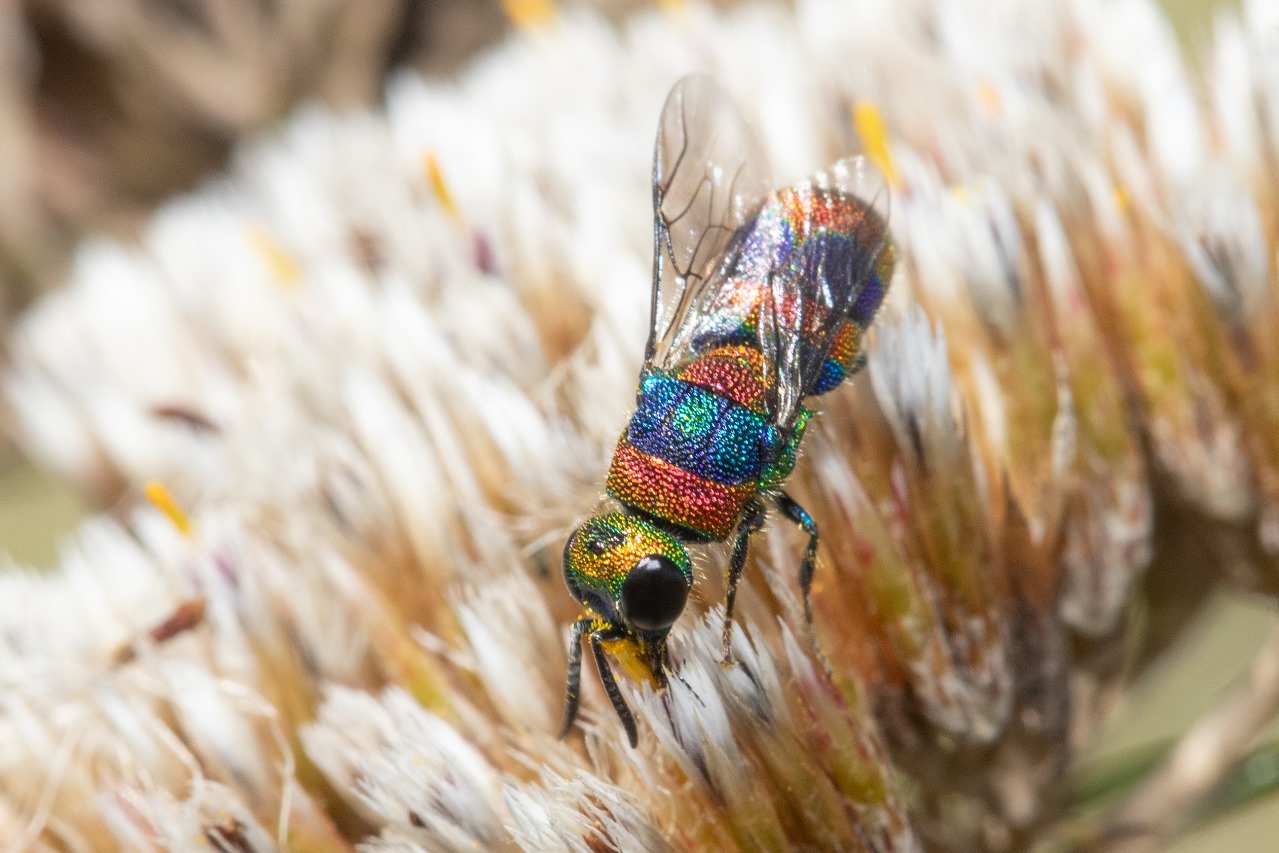
The Rainbow Cuckoo Wasp gets it's name from it's cuckoo-like behaviour of laying its eggs in the nests of other insects. Credit: Dr Odette Curtis Scott, ORCT
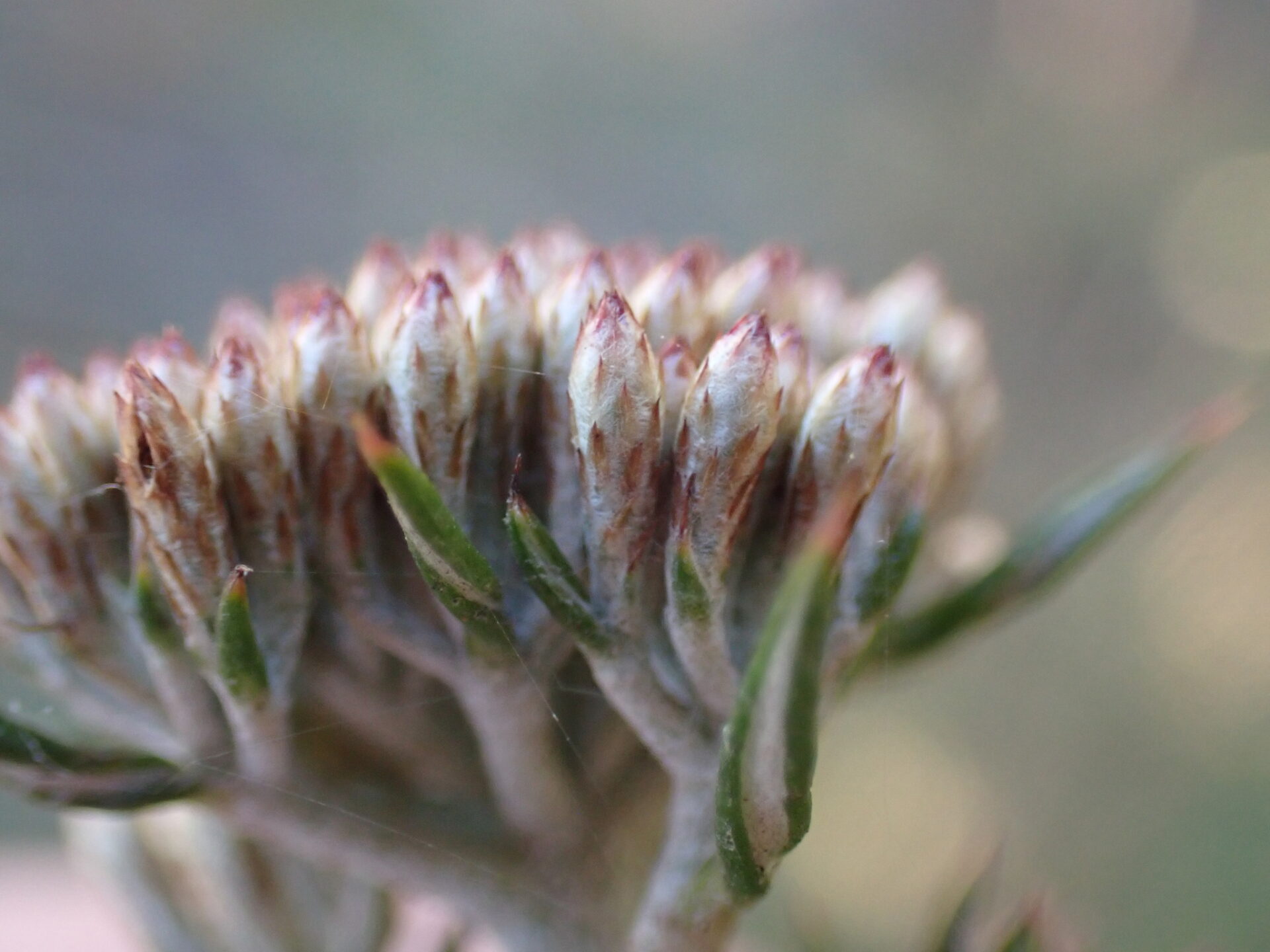
In the whole patch, only two species were still flowering: Crassula tetragona with its succulent leaves and tiny white clusters of flowerheads, and Metalasia acuta— an unassuming, spiky, grey-green shrub of the daisy family. Image: Metalasia acuta. Credit: Adriaan Grobler, iNaturalist, (CC)
Learn more about the Buy an Acre programme here

It was as I walked past a cluster of Metalasia that I disturbed a flurry of what turned out to be the very attractive Heliotrope Moth (Utetheisia pulchella). Because they were so plentiful, I decided to sit next to one of the Metalasias and see if any other pollinators or their predators might come along. Credit: BT Wrenhill, iNaturalist (CC)

The world that revealed itself kept me glued to that spot for nearly two hours! To my luck— but not the moth’s— I found a Heliotrope being subdued by a ridiculously well-camouflaged Praying Mantis (Miomantis). Credit: Janey Taylor, iNaturalist (CC)

While photographing the mantis, a moving stick caught my eye and there was a pale-coloured, Short-horn Walkingstick (Parabacillus), so perfectly camouflaged in the light, yellowing vegetation. Credit: hsug1747, iNaturalist (CC)
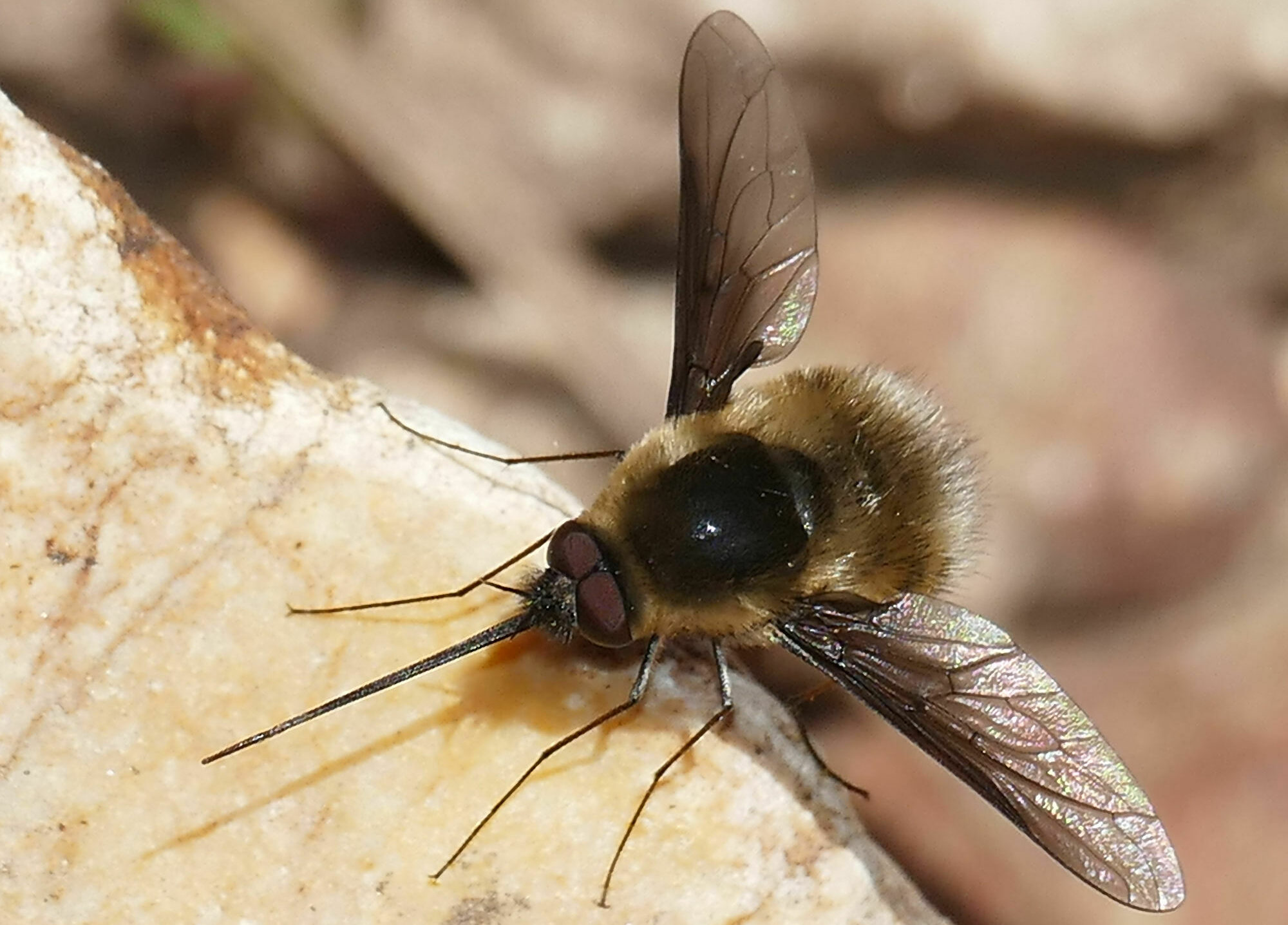
As the insects grew used to my presence, more pollinators visited the flowers— some being more obliging for the camera than others. In the mix were several solitary bees and wasps, a few butterflies, a most interesting Bee Fly in the family with the lovely name of Bombylliidae. Image: a species in the Bee Fly family. Credit: Wendy McCrady, iNaturalist (CC)

A tiny Spectacular Crab Spider (Thomisus spectabilis) also made an appearance when a breeze blew her from her perch on top of a flower where she had been preparing a surprise attack on an unsuspecting pollinator; Crab Spiders can take on prey significantly larger than themselves and often prey on bees). Credit: Dave Walter, iNaturalist (CC)