

Least Concern
In accordance with IUCN criteria, a species is considered to be Least Concern if it does not qualify for Critically Endangered, Endangered, Vulnerable or Near Threatened. Widespread and abundant taxa are included in this category.
Species data
Class
Amphibia
Order
Anura
Family
Phyllomedusidae
Scientific Name
Agalychnis callidryas
Reserve locations
Honduras
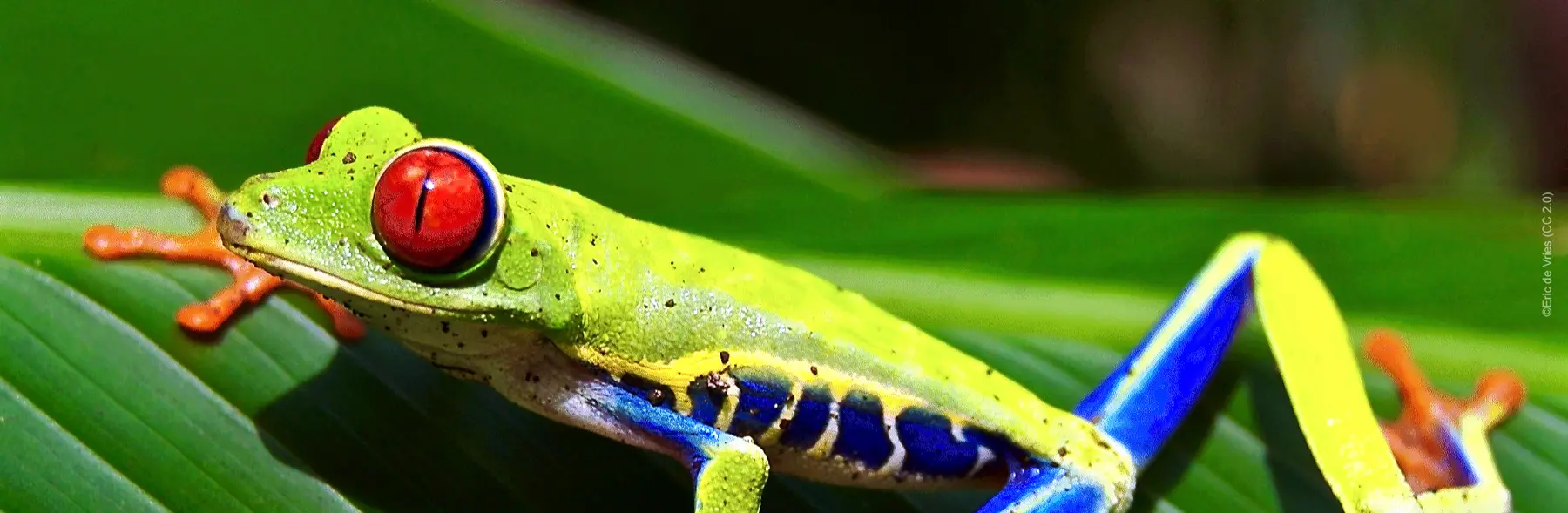
Dubbed “the world’s most famous frog”, the iconic Red-eyed Tree Frog can be found in the rainforests of Central and South America.
The species has become the poster child for many conservation organisations owing to charismatic features such as its large red eyes, its vibrant green body and the yellow and blue markings along its side.
Despite these bright colours, Red-eyed Tree Frogs are not poisonous. Their colouration is instead meant to over-stimulate a predator’s eyes, in a bluffing technique known as deimatic behaviour.
Behaviour
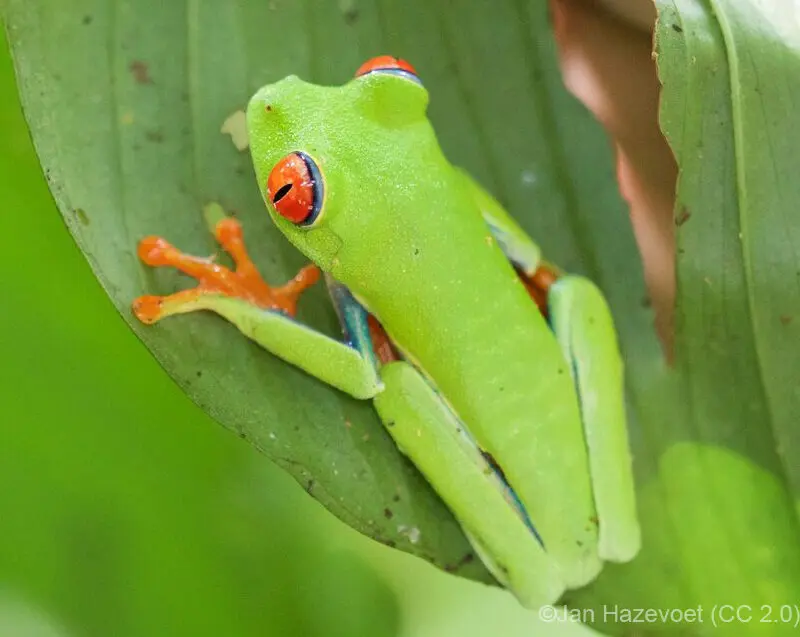
As arboreal species, Red-eyed Tree Frogs inhabit the forest canopy for much of their lives. The species is nocturnal; they sleep on the underside of leaves during the day, keeping their colourful markings concealed by tucking their bright feet under their stomachs. At night, their long sticky tongue and disproportionally large eyes allow them to catch a variety of insects, from crickets to moths, flies or grasshoppers.
To attract a mate, males will bounce up and down on leaves, visibly shaking them to make their presence known to females. Later in the monsoon season, female Red-eyed Tree Frogs will descend from the canopy to lay their eggs above bodies of water, which tadpoles will then fall into once matured. As with other species of frogs, multiple paternity of offspring is commonplace.
Habitat
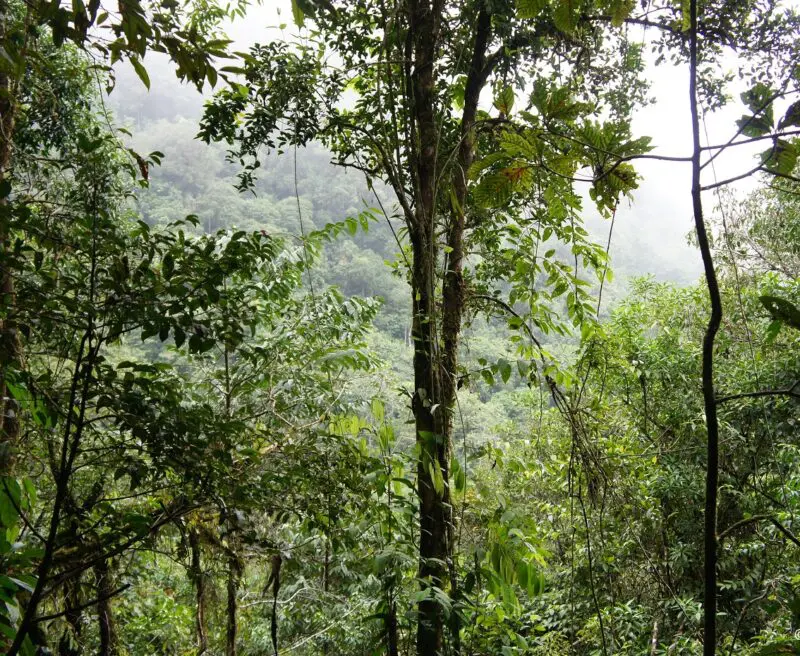
Red-eyed Tree Frogs inhabit the Neotropical rainforest of Central America, with minimal distribution in South America.
Their range extends from Mexico to Panama, and then subsequently across an isolated patch in northern Colombia.
The species dwells in tropical lowland and montane forest with continuous forest cover, favouring areas in close proximity to rivers and ponds as these are vital for their reproduction cycle.
Threats and Conservation
A fairly common species, Red-eyed Tree Frog’s conservation status is currently classified as Least Concern by the IUCN. However, these frogs are experiencing localised population declines as their rainforest habitat shrinks in area and quality in Central America, fuelled by deforestation for timber and agriculture.
Red-eyed Tree Frogs have been a CITES-listed species since 2008. Research has found the species fares relatively well in areas subject to selective logging, indicating some resilience to habitat loss. However, these frogs remain at risk from diseases such as ranavirus and common captures for the international pet trade.
In 2021 and with support from World Land Trust’s Big Match Fortnight campaign, our in-country partner FUNDAECO will be tripling the size of a protected area – the Laguna Grande Reserve – that safeguards Red-eyed Tree Frog habitat.