

Endangered
In accordance with IUCN criteria, a species is considered to be Endangered if it is facing a very high risk of extinction in the wild.
Species data
Class
Mammalia
Order
Proboscidea
Family
Elephantidae
Scientific Name
Elephas maximus
Reserve locations
-
Description
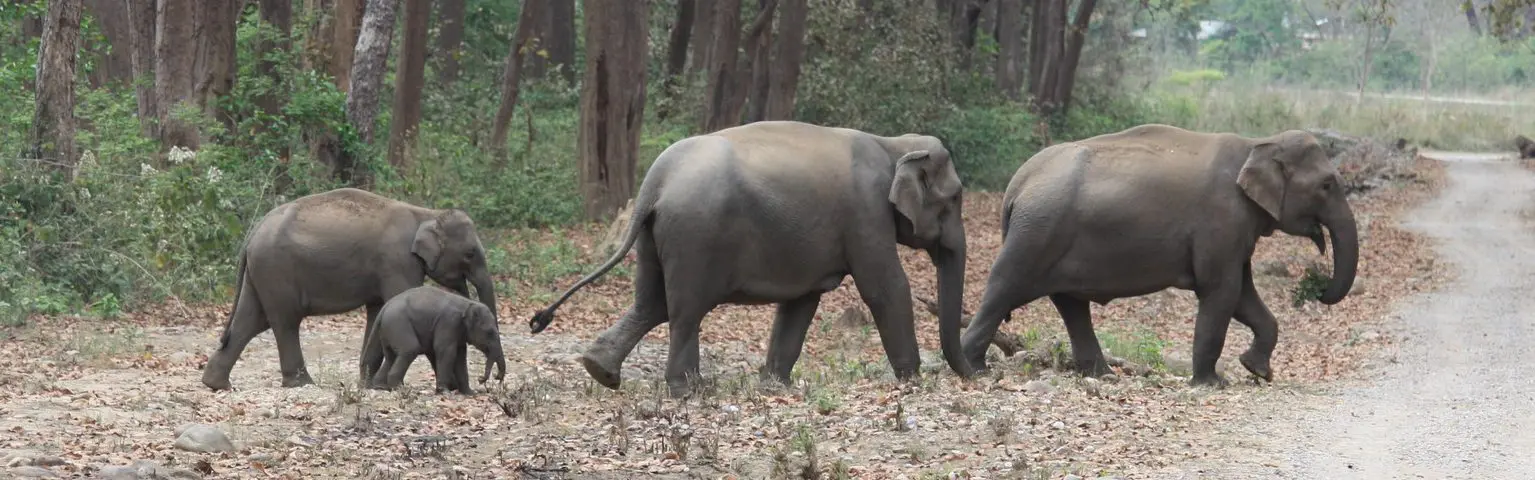
The Indian Elephant is one of the recognised sub-species of the Asian Elephant.
Asian Elephants differ in many ways from their African relatives – they are smaller in size with smaller ears, and the back of the Indian elephant is more rounded making the crown of the head the highest point of the body. The African species has a two-fingered tip to its trunk where the Indian Elephant has only one ‘finger’; while the tusks of the male Indian Elephant are more curved and thicker than those of the African.
In fact, Asian and African Elephants differences go farther than appearances, as some genetic studies have shown that the Asian Elephant is thought to be more closely related to the extinct Woolly Mammoth than African Elephants.
They live for 60 to 70 years and adults reach maturity at about 15 years old.
The Bornean Elephant is another subspecies of the Asian Elephant, and is possibly descended from the now-extinct Javan Elephant.
Behaviour
Habitat
Threats and Conservation
Asian Elephants once roamed through much of Asia south of the Himalayas, extending west into China and south to the islands of Sumatra and Borneo. However, loss of habitat, hunting over hundreds of years, and human encroachment have significantly impacted on their numbers.
Current estimates are for fewer than 50,000 Asian Elephants surviving in the wild, and their populations are restricted to isolated pockets of land. Because of the burgeoning human population in India, elephants and humans are often in conflict particularly in food-producing areas.