

Vulnerable
In accordance with IUCN criteria, a species is considered to be Vulnerable if it is facing a high risk of extinction in the wild.
Species data
Class
Mammalia
Order
Pilosa
Family
Myrmecophagidae
Scientific Name
Myrmecophaga tridactyla
Reserve locations
-
Description
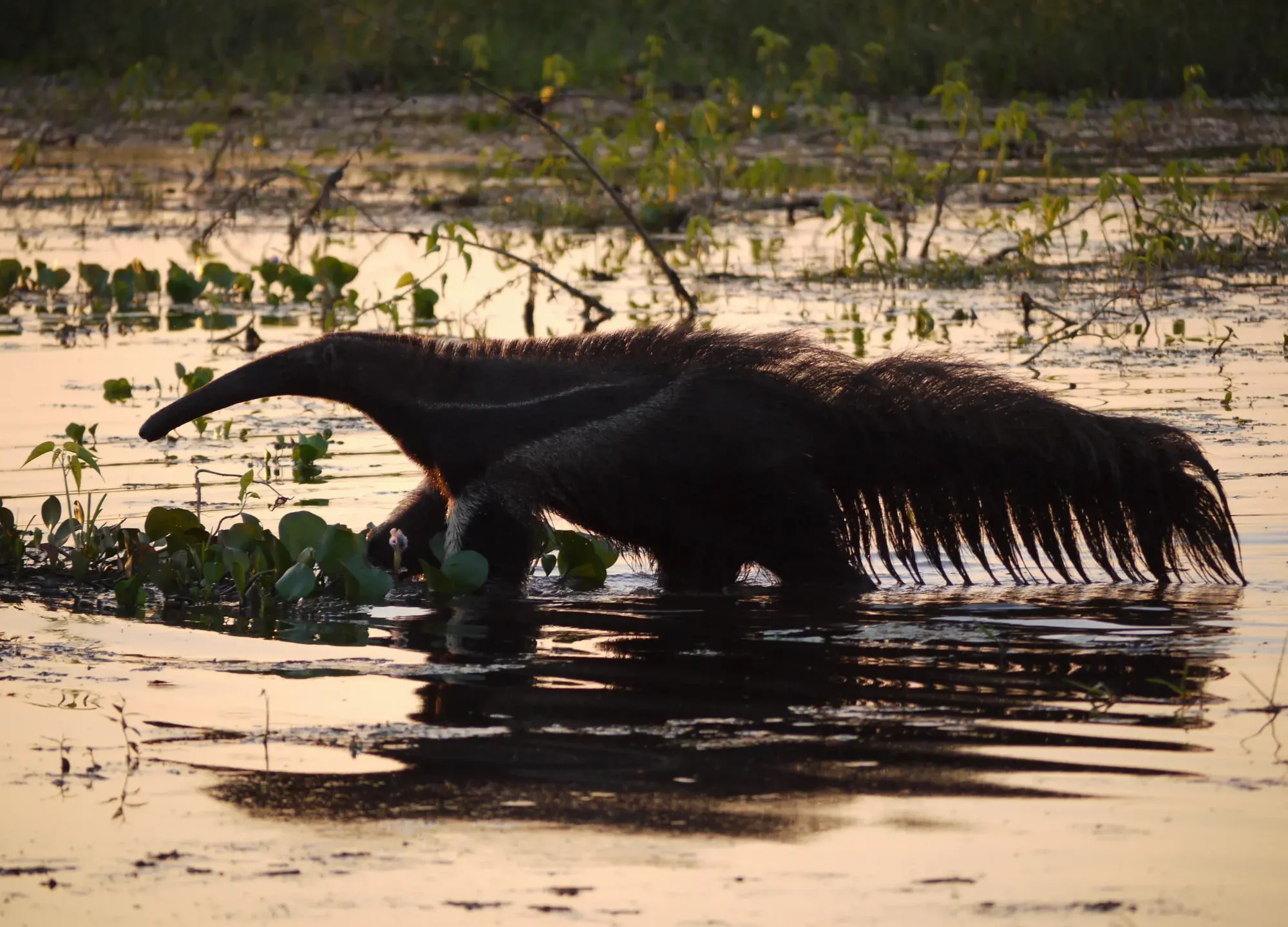
The Giant Anteater, as its name suggests, is the largest of the 4 species of anteaters and can weigh up to 23 kg (50 lb) and can measure up to 240 cm in overall length. All anteaters are insectivorous and Giant Anteaters have a long tube-shaped nose, with a tiny mouth and a long, sticky tongue. They use their strong front claws to open termite hills and also for defence; when walking their claws are tucked under and they walk on their knuckles.

Behaviour

Habitat
Threats and Conservation
The range of the Giant Anteater once extended from Belize (where it now thought to be possibly extinct) to North West Argentina, but numbers have declined throughout most of its range resulting in scattered, isolated populations. The main threats to the Giant Anteater is habitat loss by agricultural encroachment, especially in Central America. Fire is a particular problem for grassland populations. They are also hunted throughout their range both for food and as a pest species.