

Least Concern
In accordance with IUCN criteria, a species is considered to be Least Concern if it does not qualify for Critically Endangered, Endangered, Vulnerable or Near Threatened. Widespread and abundant taxa are included in this category.
Species data
Class
Mammalia
Order
Pilosa
Family
Bradypodidae
Scientific Name
Bradypus variegatus
Reserve locations
-
Description
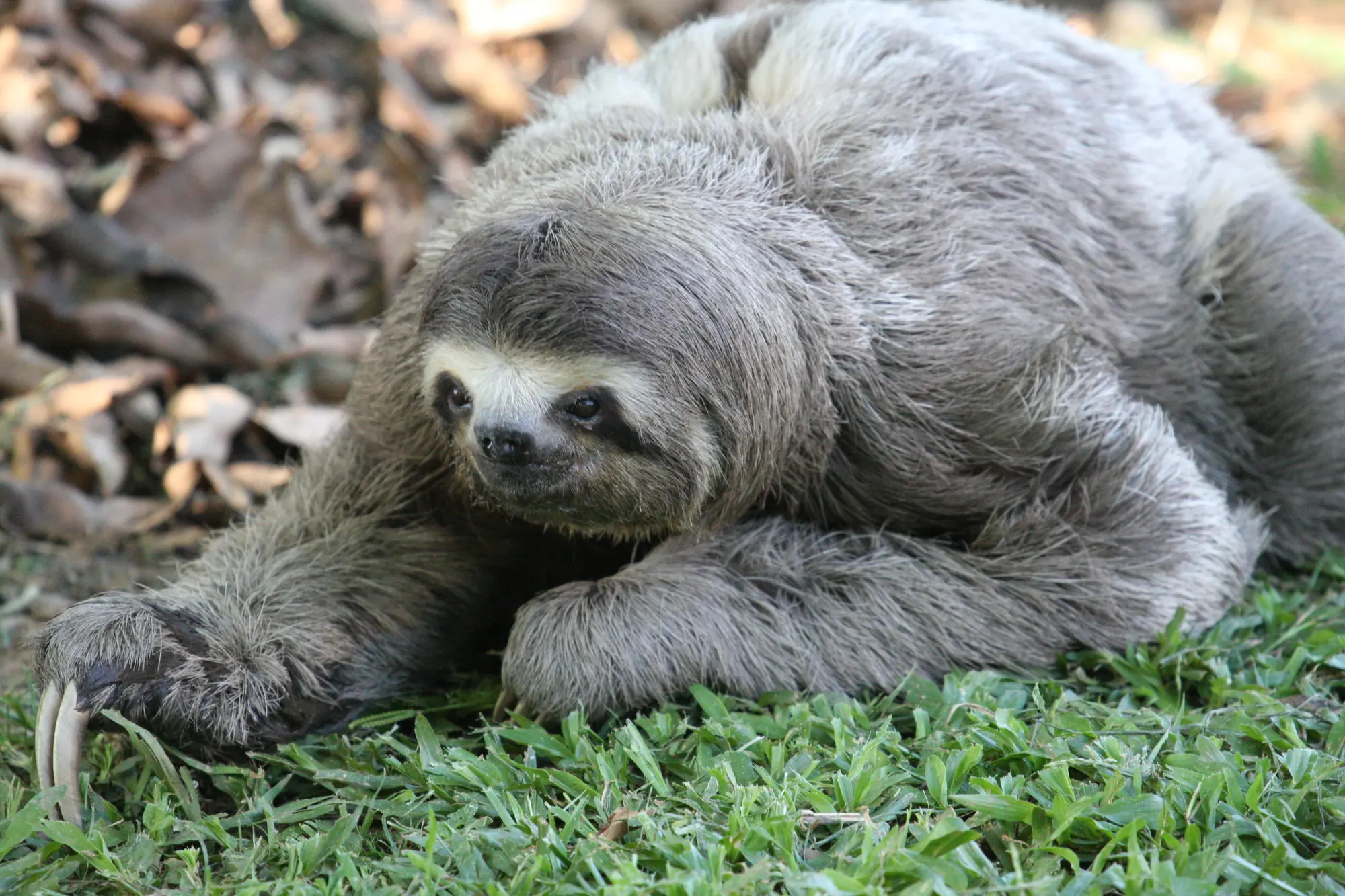
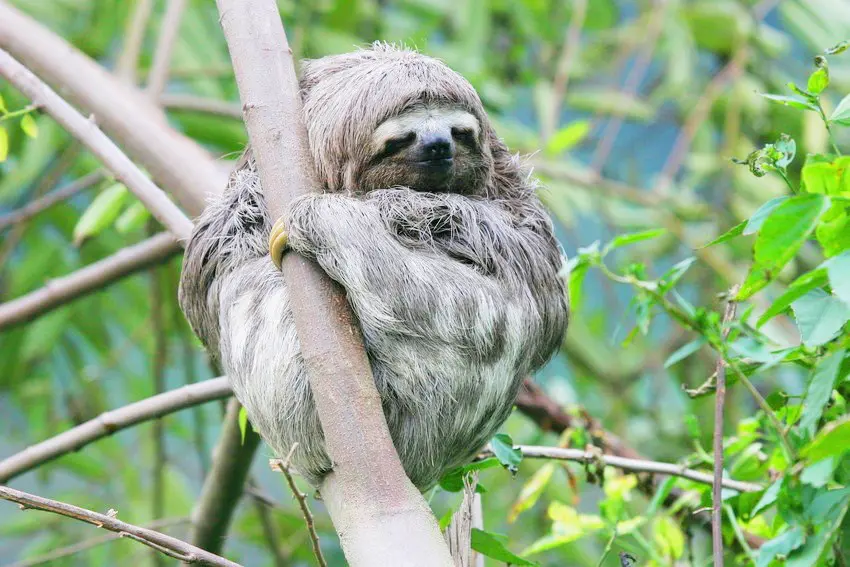
The Brown-throated Three-toed Sloth is about the size of a domestic cat, ranging from 45-60cm. Like all sloths, it has long limbs and a small head for the size of its body. Sloths’ fur hangs ‘backwards’ compared to other mammals, lying from the stomach to their back. This allows the water to run off as the sloth hangs upside down in a tree. Sloths do not have visible toes but instead have long claws. In this species they have three claws on each foot, which enable them to hang from the branches of trees (2). The Brown-throated Tree-toed Sloth can also be distinguished from other species by its brown fur and upturned mouth, giving the sloth a constant ‘smile’.
Despite its name, the Brown-throated Three-toed Sloth is often tinged with green, as blue green algae grows in its fur, especially in the rainy season. Adult males also have a yellow/orange patch of fur with a black stripe between their shoulders.
Behaviour

Habitat
Threats and Conservation
Although classified as Least Concern by the IUCN Red List, some populations of the Brown-throated Three-toed Sloth are threatened by habitat destruction, and the IUCN highlights declines in both Colombia and the Atlantic Forest of Brazil. In the Atlantic Forest the population has a very low genetic diversity and there is pressure from hunting. In Colombia there is a growing illegal pet trade. Sloths are also frequently killed on roads.