

Least Concern
In accordance with IUCN criteria, a species is considered to be Least Concern if it does not qualify for Critically Endangered, Endangered, Vulnerable or Near Threatened. Widespread and abundant taxa are included in this category.
Species data
Class
Amphibia
Order
Anura
Family
Phyllomedusidae
Scientific Name
Agalychnis moreletii
Reserve locations
-
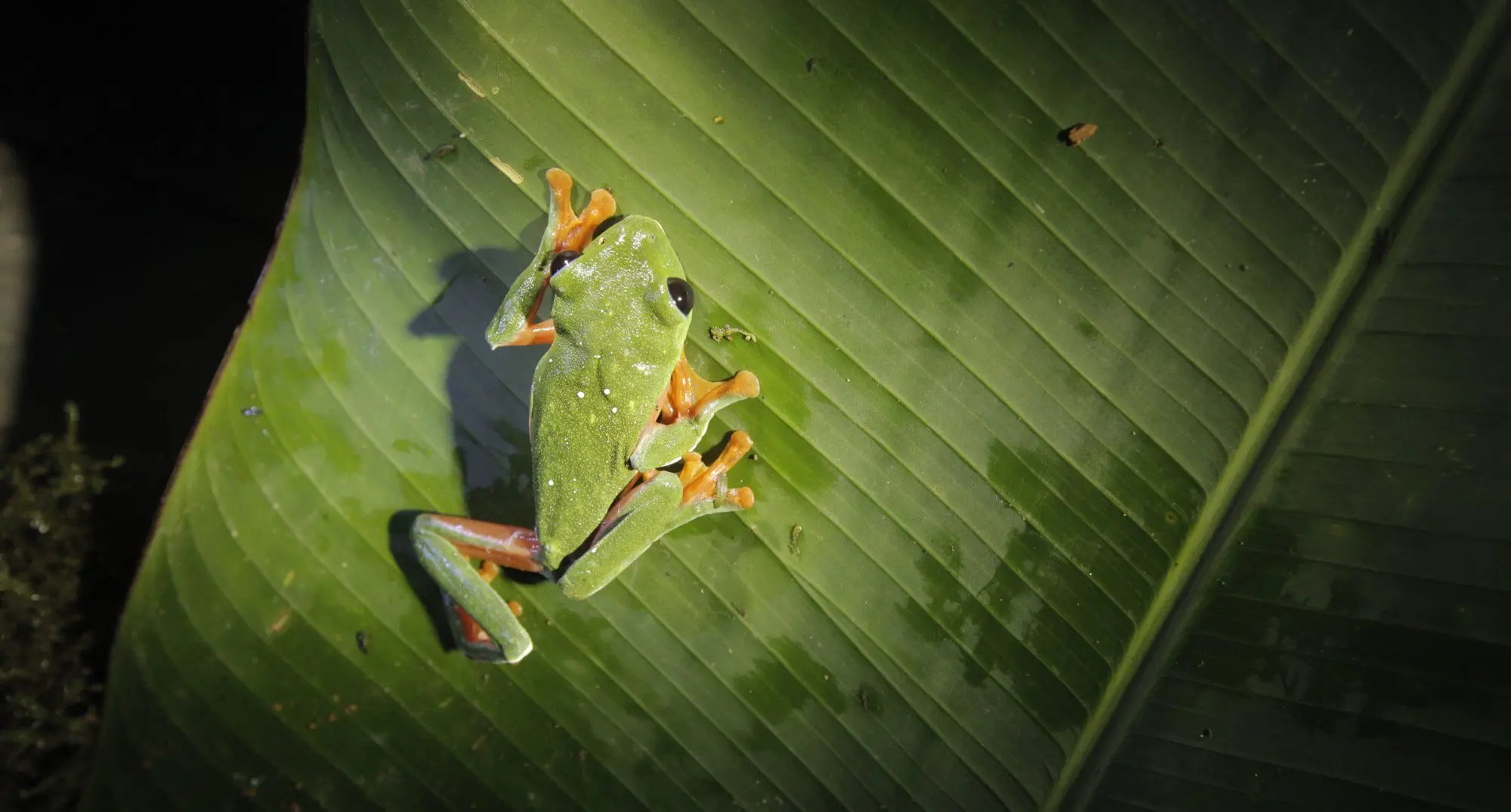
Females (6.5-8.5cm) of this species are slightly larger than the males (5.5-6.5cm). They typically have a lime green body, black eyes, a flesh-coloured pale underbelly and orange toes. However, they can change shades of green to blend in with the foliage around them if given enough time.
Behaviour
Habitat
Threats and Conservation
This species has been hit hard by the disease chytridiomycosis, a fungal infection which has been identified as one of the major causes of global amphibian declines and extinctions around the world, caused by the parasitic chytrid fungus Batrachochytrium dendrobatidi³.
The Black-eyed Leaf Frog was also affected by the pet trade, though that is no longer a major threat. Habitat destruction due to subsistence and smallholder agriculture remains one of the largest factors affecting its conservation as its habitat is now severely fragmented.