PARAGUAY

Bordered by Argentina, Bolivia and Brazil, landlocked Paraguay is located almost at the very centre of South America at the convergence of four of the continent’s bioregions.

Running from north to south, the River Paraguay roughly divides the country into two distinct geographic regions—the western arid lowland Chaco or Occidental region comprising 61% of the country, and the eastern, humid upland Paraneña or Orient, where the vast majority of the country’s population lives.

The Paraguayan Chaco, Paraguay’s largest bioregion, comprises 23% of the vast Gran Chaco—South America’s second-largest forest—extending for 1,066,000 km² (411,585 square miles) across the lowlands of northern Argentina, western Paraguay, southern Bolivia and into Brazil. The Paraguayan Chaco is divided into two ecoregions—the Dry Chaco in the north-west dominated by scrubby xeromorphic forests adapted to very irregular rainfall, and the Humid Chaco, a mosaic of dry forests, palm savannahs and seasonally flooded wetlands.

Along the north-east border with Brazil, the Chaco transitions into the flooded grasslands and wetlands of the Pantanal, while in the east of the country, the Chaco gives way to two of the world’s biodiversity hotspots—the Atlantic Forest and Cerrado savannah.

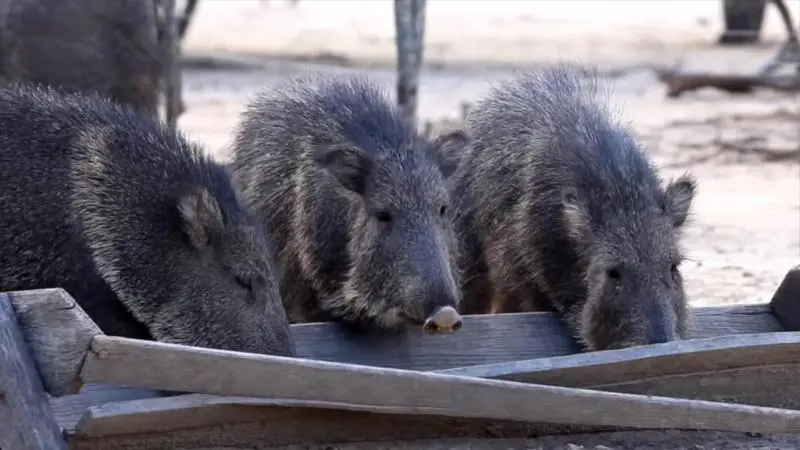
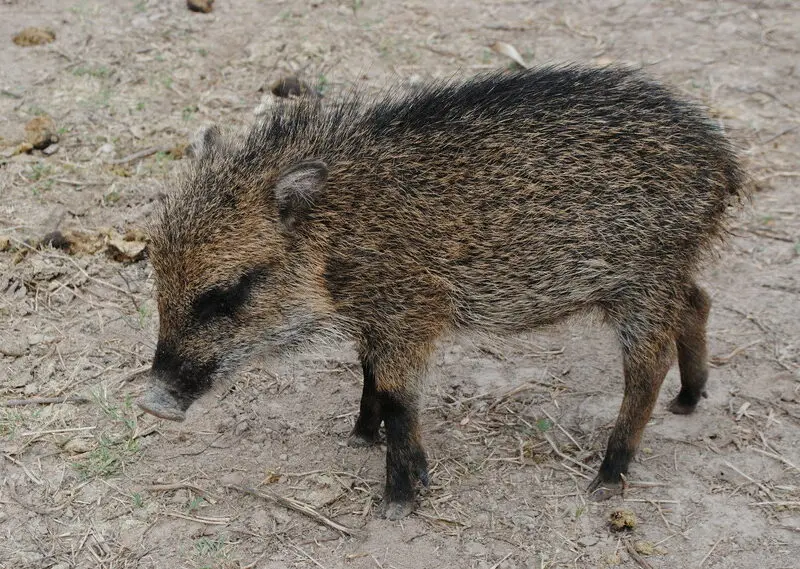
Paraguay’s rich biodiversity includes 395 fish species, 88 amphibians, 135 reptiles, and 688 bird species, including Crowned Solitary Eagle (Endangered) and Bare-faced Curassow (Vulnerable). The 181 mammal species recorded include the threatened Chacoan Peccary (Endangered)—thought extinct until the first live individuals were sighted in 1970—as well as Lowland Tapir, Marsh Deer and Southern Tiger Cat (Vulnerable), and nine species of armadillos, including the rare Giant Armadillo (Vulnerable).

The Paraguayan Chaco has one of the highest deforestation rates in the entire Gran Chaco, with 50% of the forest predicted to be lost to cattle ranching and soy production by 2030. Wildfires are another major threat, destroying vast areas in the Chaco and the Pantanal in recent years, and poaching remains a significant threat to the country’s biodiversity. WLT has supported partner Guyra Paraguay since 2005 with forest protection in the Pantanal, Atlantic Forest and Dry Chaco.

PARAGUAY

  • 2004

    Supported since

  • 27,312

    HECTARES FUNDED

    (67,489 acres)

  • 3,189

    HECTARES CO-FUNDED

    (7,880 acres)

  • 82,646

    Trees planted

Our Partners in Paraguay

  • Guyra Paraguay

    In 1997 a group of individuals resolved to create an organisation, Guyra Paraguay, with the aim of preserving bird species in Paraguay. Concerned about the widespread destruction of Paraguay’s habitats, they chose to focus on birds as important indicators of overall biodiversity.

Our projects in Paraguay

San Rafael Endowment Fund

Situated in south-east Paraguay, San Rafael is a region in the Alto Paraná Atlantic Forest—the westernmost area of the Atlantic Forest world biodiversity hotspot—extending across western Brazil, eastern Paraguay and north-eastern Argentina. Owned by WLT partner Guyra Paraguay, the 7,000 ha (17,297 acre) Guyra Reta Reserve includes humid subtropical semi-deciduous forest, natural grasslands, and areas previously cleared for agriculture. A total of 505 species of birds occur here, including the threatened Saffron-cowled Blackbird (Endangered) and Cock-tailed Tyrant (Vulnerable), as well as 45 mammal species such as Southern Tiger Cat and Lowland Tapir (Vulnerable), Puma, and 45 species of reptiles, 33 amphibians, and 3,000 plant species. The Guyra Reta Reserve is also home to campesino farmers and the indigenous Mby’a Guaraní people. Both depend on the forest, but extreme poverty and lack of access to alternative livelihoods have driven unsustainable exploitation of resources and encroachment into the reserve for illegal marijuana plots, timber cutting, poaching, and charcoal production. The San Rafael Endowment Fund allows Guyra Paraguay to employ local rangers to patrol the reserve and to work with local communities to combat fires and create sustainable incomes, such as producing forest-grown yerba mate tea.
Explore San Rafael in more detail with our interactive map

Chaco-Pantanal

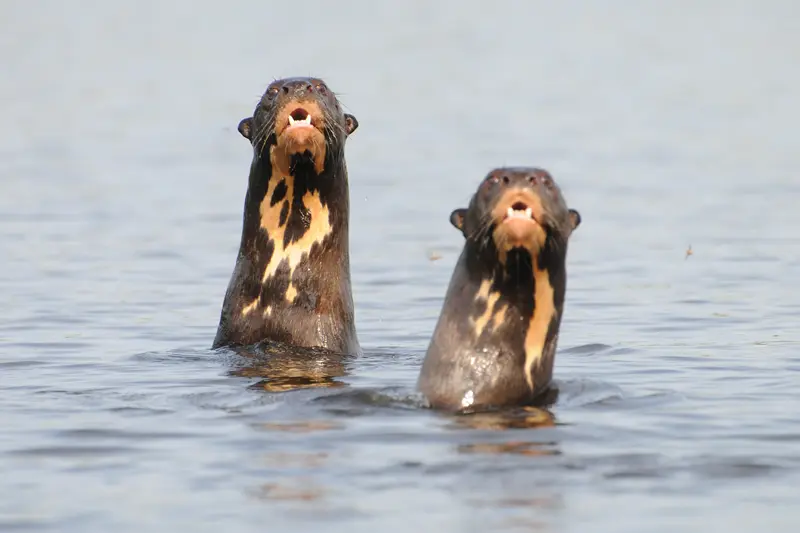
WLT began its partnership with Guyra Paraguay in 2004 and funded the Chaco-Pantanal Reserve in 2006, which protects 14,600 ha (36,077 acres) of the Paraguayan Pantanal—part of the world’s largest tropical wetland—safeguarding habitat along the Río Negro and forming a larger cross-border protected area with the Otuquis National Park in Bolivia. In 2008, WLT Council Member Kevin Cox funded the creation of the Three Giants Biological Station, which now serves as the base for the reserve’s rangers and researchers. Situated in the transition zone between the Pantanal and Dry Chaco, the Chaco-Pantanal Reserve includes wetlands, tropical semi-deciduous forest, tropical deciduous forest, tropical semi-evergreen forest, shrubland, savannah, and riparian forests. Home to a rich biodiversity, 46 species of mammals are found here, including the iconic Jaguar, and threatened species such as Giant River Otter (Endangered), Giant Anteater, Lowland Tapir and Marsh Deer (Vulnerable), as well as 291 bird species, 33 reptile species, 19 species of amphibians, and 140 species of fishes. Wildfires are the biggest threat here, damaging 60% of the reserve in 2019. WLT is funding four local rangers over three years to monitor biodiversity and safeguard against wildfires, illegal grazing and poaching.
Explore the Chaco-Pantanal in more detail with our interactive map

Chaco Corridors

South America’s Gran Chaco has one of the highest rates of deforestation in the world, with around 20% of this vast dry forest cleared since 1985. With one of the highest rates of deforestation in all the Gran Chaco, the Paraguayan Chaco lost 2.4 million ha (5.9 million acres) between 2010 and 2019, mainly due to the expansion of cattle pasture in Paraguay’s Dry Chaco. Located in northern Paraguay, the Cerro Chovoreca Natural Monument is a protected area covering 100,000 ha (247,105 acres) of Dry Chaco, home to the Jaguar and threatened species such as Lowland Tapir and Giant Anteater (Vulnerable) as well as Crowned Eagle and Chacoan Peccary (Endangered). Although landowners in the Cerro Chovoreca Natural Monument are legally required to retain forest on at least 25% of their land, these areas are maintained as timber reserves, degraded from timber extraction, and are unconnected, offering poor protection for biodiversity. With WLT support, Guyra Paraguay is working to increase the land’s legal protection by changing the status of Cerro Chovoreca National Monument to a National Park. WLT and Guyra are also creating forest corridors between protected areas, which will be managed with landowners to maximise forest connectivity and wildlife protection.
Explore the Chaco Corridors in more detail with our interactive map

Key species protected by WLT projects